
TRPL
AI Photo Station
Producing an AI-Driven Interactive Experience for the Theodore Roosevelt Presidential Library
Role
Interactive Production Coordinator (Lead)
Timeline
May 2024 – March 2025
Overview
The AI Photo Station is an interactive exhibit designed for the Theodore Roosevelt Presidential Library (TRPL) that allows visitors to insert themselves into historically inspired scenes from Roosevelt’s life. Using AI-generated transformations, visitors take a selfie and see themselves reimagined across different narrative contexts—ranging from the Elkhorn Ranch to Roosevelt’s time in the Navy and the White House.
As the Interactive Production Coordinator and project lead for this system, I was responsible for shaping the experience from early concept through production—defining interaction flows, structuring content systems, coordinating across teams, and translating client feedback into a cohesive, functional exhibit.
My Role
- Led production of the AI Photo Station as a core interactive within the TRPL experience
- Defined interaction logic and user flow from attract loop to final output
- Designed and structured the content system (background sets, categories, and asset logic)
- Coordinated across design, programming, and content teams
- Synthesized client feedback into actionable design and system changes
- Directed testing and iteration, focusing on usability, realism, and narrative clarity
Ongoing Research
The project required balancing three competing priorities:
Historical Authenticity vs User Delight
The experience needed to feel grounded in Roosevelt’s world while still being engaging and playful.
AI Realism vs System Constraints
A central requirement was that users should feel like the output “actually looks like them”—a difficult challenge given variability in AI-generated results.
Narrative Structure vs Technical Simplicity
The system needed to support multiple thematic environments while remaining manageable from a content and CMS perspective.
Approach
Designing the End-to-End Interaction Flow
I developed a clear interaction structure to guide users through the experience:
Step 01
Attract Loop
draws visitors in with dynamic visuals and messaging
Step 02
Capture Moment
user takes a photo
Step 03
Transformation Phase
AI applies historical styling
Step 04
Result Display
final composited image within a themed environment
Special attention was given to transitions—ensuring that movement between stages felt smooth, intuitive, and visually cohesive within a public exhibit context.
Structuring the Content System
To support both narrative variety and system scalability, I organized the experience into distinct thematic categories, each tied to a period or identity from Roosevelt’s life:

Elkhorn Ranch
(nature-focused environments)
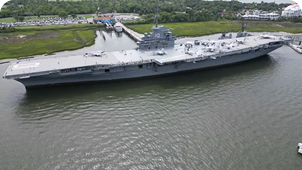
Navy
(nautical settings)
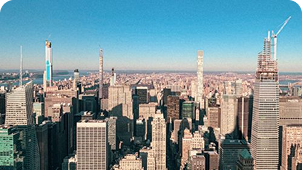
New York Elite
(formal, high-society styling)

Rough Riders
(camp and military-inspired scenes)

Amazon Expedition
(jungle environments, adjusted to remove weapons)

White House
(interior and exterior presidential settings)
Each category required:
Curated background assets
Consistent visual tone
Alignment with historical and client expectations
I worked closely with the team to refine these sets based on feedback—for example:
Expanding nature-focused backgrounds for Elkhorn
Increasing nautical visual elements for Navy
Removing historically sensitive elements (e.g., weapons) from the Amazon set
Translating Client Feedback into System Decisions
A key part of my role was bridging client vision and technical implementation. Rather than treating feedback as surface-level changes, I translated it into structured updates:
- “Does it look like the user?” → Adjusted evaluation criteria and testing focus
- “More variety in backgrounds” → Expanded asset pools within categories
- “Better thematic clarity” → Strengthened visual distinction between sets
This required constant iteration across:
Content selection
Prompting and output evaluation
Interaction pacing and clarity
Designing for Public-Space Usability
Unlike personal apps, the experience had to function in a high-traffic museum environment. I accounted for:
Quick comprehension
(users must understand the experience instantly)
Short interaction cycles
(to support throughput)
Clear visual hierarchy
for instructions and outputs
Accessibility considerations,
including readability and interaction clarity
Iteration and Testing
I led ongoing testing to evaluate:
- Quality and consistency of AI outputs
- User recognition (“does this feel like me?”)
- Clarity of interaction steps
- Engagement with different thematic environments
This required constant iteration across:
Background selection
Transition timing
Output presentation
System flow
Outcome
The AI Photo Station evolved into a multi-scenario interactive system that:
- Integrates AI-generated imagery into a narrative museum context
- Balances historical storytelling with personalized engagement
- Supports multiple themed environments through a structured content system
- Translates complex technical processes into a simple, intuitive user experience
Key Contributions
- Defined the core interaction model for the experience
- Built a scalable content and category system for themed outputs
- Led cross-functional coordination across design, engineering, and content
- Transformed client feedback into clear system-level decisions
- Guided testing and iteration to improve realism, usability, and engagement
Reflection
This project reinforced how designing AI-driven experiences is not just about the technology—it’s about perception, trust, and interpretation.
The most critical challenge was not generating images, but ensuring that users:
- Recognize themselves in the output
- Understand the transformation
- Feel meaningfully connected to the experience
It also highlighted the importance of structuring content systems early, especially when working with dynamic, multi-scenario interactions.